A Question Is a Better Starting Point Than a Theme
A question is a better starting point than a theme: turn a vague idea into a creative prompt that points to workable material without dictating your answer.
The common mistake in creative prompts is choosing a theme so broad it gives you nothing to do: “belonging,” “change,” or “memory.” A question is a better starting point than a theme because it gives your attention a direction while leaving the answer open. Without a workable direction, you can collect possibilities without beginning a project.
Turn themes into material
A theme names a territory, not a task. “Home” might lead to a story, collage, song, or list, but it does not suggest what to notice or what tension to explore.
Translate the theme into a question about an action, object, or moment. Instead of “home,” try “What object would someone carry from a room they are leaving, and why?” That wording suggests concrete material while leaving the work’s meaning undecided.
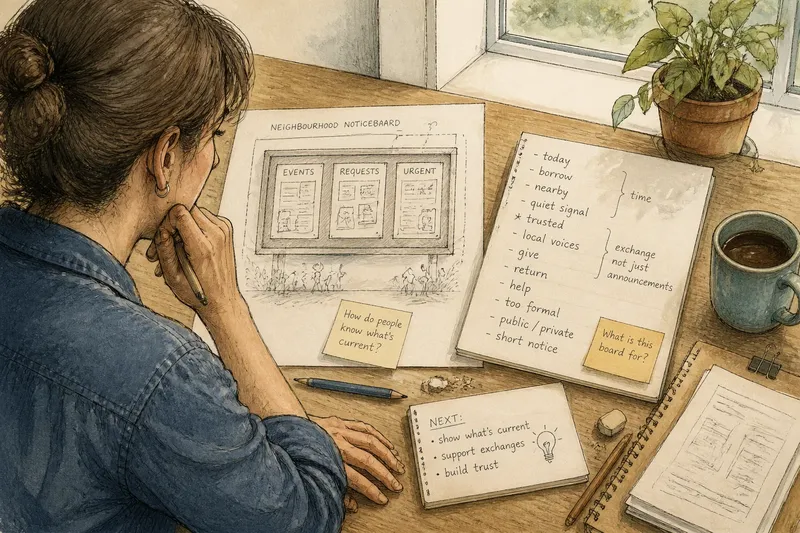
Write the theme at the top of a page, then draft questions beginning with “what,” “how,” or “when.” Circle the one that makes you think of a scene, image, sound, or remembered detail; if none does, add a place or action.
Remove the built-in verdict
A prompt can quietly contain its own conclusion. “Why is technology ruining friendship?” assumes the verdict before you begin, so you may notice only details that support it.
Replace loaded words such as “ruining,” “best,” or “obviously” with language that leaves several possibilities in play. “How do phones change the small rituals between friends?” allows for closeness, distraction, convenience, irritation, or mixed effects.
Say you are making a short audio piece about neighborhood sounds. You begin with “Why are noisy streets unbearable?” and list only complaints. You change it to “What do street sounds tell someone about the life around them?” and plan to record a delivery cart, a departing bus, and a neighbor calling across the block; the resulting clips offer different directions for the piece instead of one predetermined message.
Set a workable boundary
“What is a good life?” opens a subject too large for most single projects. It asks for a complete answer rather than a useful angle.
Keep the interest, but give it a boundary: one room, conversation, recurring object, season, or decision. “What does a good life look like?” might become “What does a good day look like to someone who works nights?” The narrower version gives you a setting and a person to imagine without dictating what the answer must be.
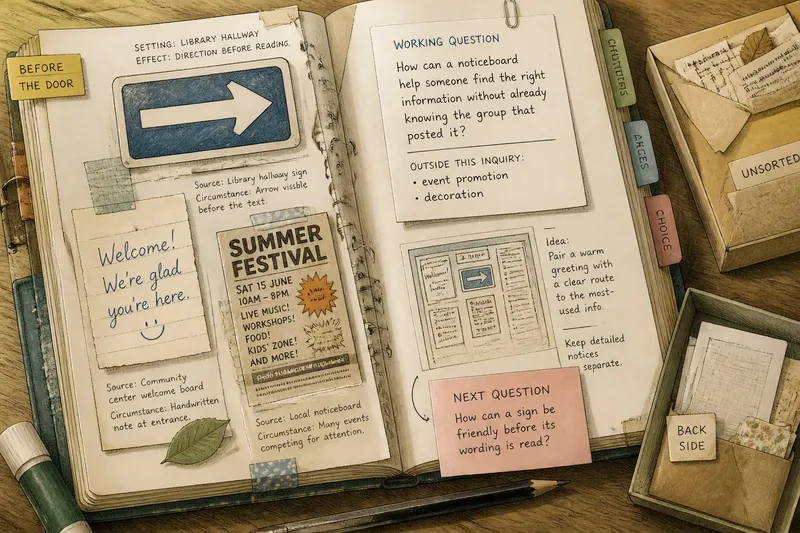
Check whether you can name possible material for the prompt. If not, add a setting, person, moment, or medium; if you can already predict every detail, remove one boundary.
Find something to work with
Even a focused question can feel remote if it stays in abstract language. “What is resilience?” invites a definition, while “What does someone keep doing after a plan falls apart?” points toward actions and scenes.
Replace a large noun with a verb, object, or moment. Ask what someone carries, avoids, repeats, repairs, or notices. For visual work, look for things that could appear in a frame; for fiction, find a choice a character must make; for an essay, start with a detail that complicates your first assumption.
If the prompt yields no material, change its wording rather than forcing a clever answer. A useful question should help you begin making or collecting things, not become a riddle you must solve first.
Add a productive complication
A familiar question can invite familiar answers, especially when it points toward a slogan. “What makes people happy?” may produce expected responses without giving you a reason to look closer.
Add one tension that makes easy answers less complete. Ask, “What makes a quiet afternoon feel restful to one person and lonely to another?” Or ask, “What do people protect when they refuse to change a familiar routine?” The complication opens a new line of thought without choosing a winner.
Use one complication at a time. If the prompt starts to feel like a puzzle with a narrow solution, remove a condition and keep the tension that still makes you curious.
Questions about creative prompts?
Should a creative question have one answer?
No. A prompt can support several answers, even ones that conflict; its job is to focus your attention, not settle the subject for every reader.
Can a creative question begin with “why”?
Yes, but “why” can invite an explanation that sounds final before you have looked closely. If that happens, try “what,” “how,” or “when” to bring the prompt nearer to observable details.
How specific should a creative question be?
Make it specific enough that you can imagine a first scene, image, conversation, or detail. Leave it open enough that more than one outcome could grow from that material.
What if a project changes direction?
Revise the question when your material reveals a more interesting concern. Keep the original as a record of your starting point, then write a new version that fits what you are exploring now.
Revise as you work
Keep the prompt visible, but do not treat it as a contract. If new ideas seem unrelated, the question may be too broad; if every idea is forced toward one conclusion, it may be too leading.
- Check whether the prompt names a theme but no action; if it does, add a verb or a moment, then use the revised wording to begin gathering material.
- Check whether a word such as “ruining” or “obviously” prescribes a verdict; if it does, replace that word with neutral language, then allow competing responses.
- Check whether you can name a possible scene, object, or sound; if you cannot, add a setting or medium, then choose the version that suggests something you can make or notice.
- Check whether the prompt covers too many people, places, or times; if it does, narrow one boundary, then see whether the subject becomes easier to approach.
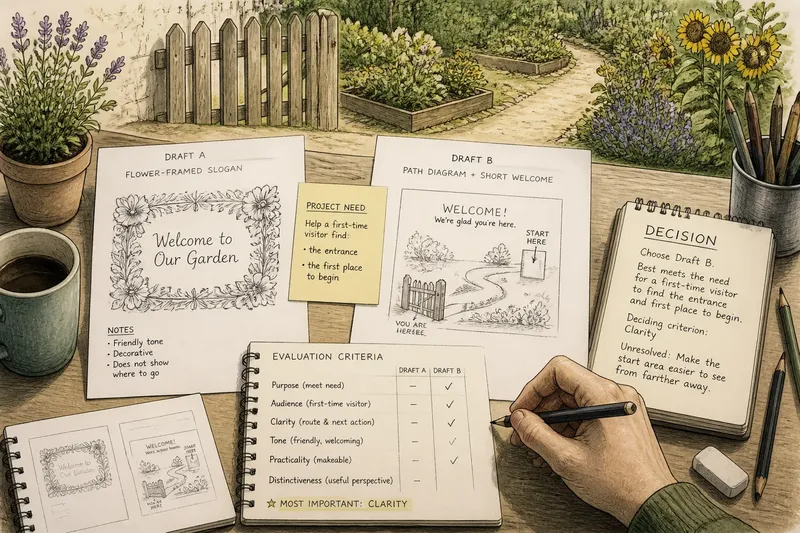
- Check whether the wording makes one answer seem inevitable; if it does, add a genuine tension or remove the leading phrase, then keep the version that opens more than one line of thought.
- Check whether your current material points somewhere other than the original question; if it does, write a revised question beside the original, then continue with the one that fits your emerging work.
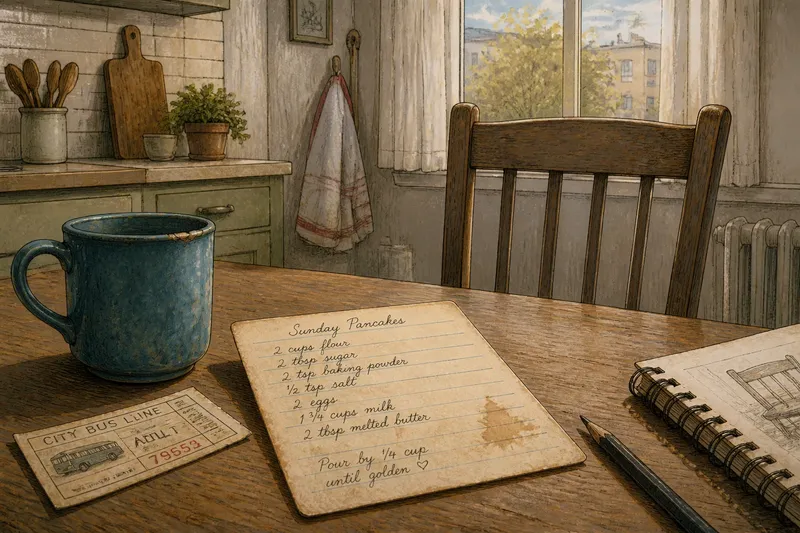
Imagine you want to make a collage about “memory,” but the word gives you no first image. You list a chipped blue mug, a bus ticket, and a recipe card, then ask, “Which ordinary object changes meaning when someone leaves home?” You choose the recipe card, sketch it beside an empty kitchen chair, and notice the contrast between a practical instruction and an absent cook; your working question becomes “What does a recipe keep when its cook is gone?” The tradeoff is clear: the narrower prompt gives the collage a scene to build from, while the larger theme remains available if the work later needs room to shift.
A question is a better starting point than a theme when it directs your attention without dictating what you must discover. Write one version, mark the words that point toward material, and cross out any phrase that prescribes the answer; revise it when the work gives you a better question to follow.